Repair & Recovery
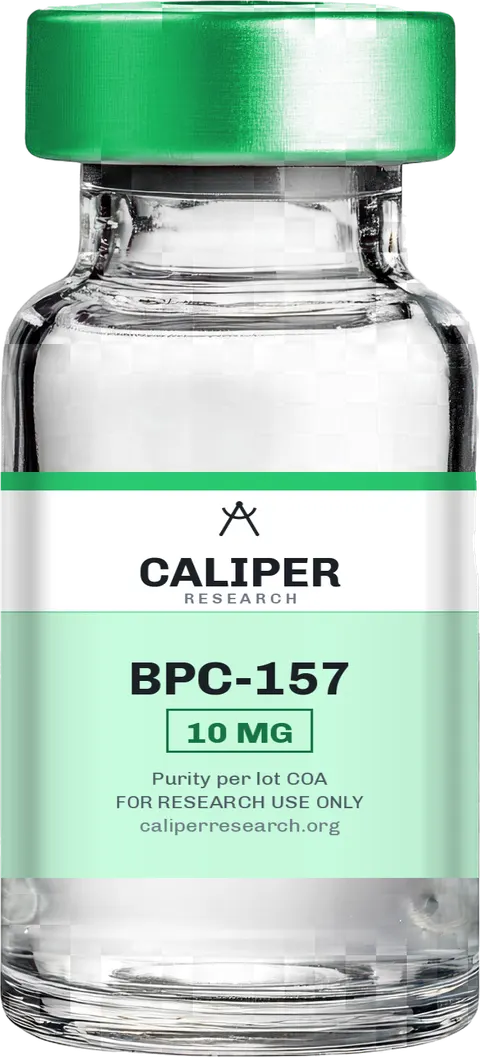
BPC-157
A synthetic pentadecapeptide sequence derived from a gastric protein fragment, widely used in ti…
- Purity
- ≥99%
- MW
- 1419.53 Da
- Form
- Lyophilized
$44.99
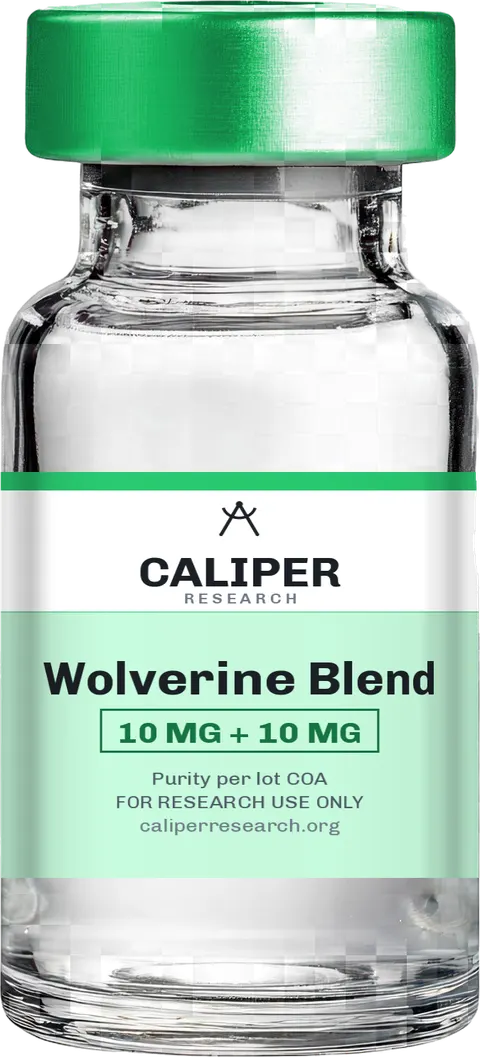
BPC-157 + TB-500 Blend · Repair Research Blend, 5mg/5mg
A co-lyophilized 5 mg / 5 mg preparation of both repair-model reference peptides in a single vial.
Select size
Research Use Only This product is supplied strictly for in-vitro laboratory research. It is not a drug, supplement, food or cosmetic, is not approved by the FDA for any use, and must not be administered to humans or animals. Purchasers must be qualified research professionals aged 21 or older.
Co-formulation allows parallel evaluation of two mechanistically distinct repair-model peptides without introducing a second reconstitution variable. Each component is assayed independently before blending and again post-lyophilization.
Caliper supplies Wolverine Blend at a release specification of ≥98% (HPLC, each component), Each lot is assayed by an independent analytical laboratory for chromatographic purity by HPLC and for identity by LC-MS against the theoretical molecular weight. The certificate for the lot you receive travels with your order, reproduced as issued.
Applications listed above describe areas in which this compound appears in published preclinical and in-vitro literature. They are provided for laboratory reference only and are not claims of efficacy, safety or suitability for any human or veterinary purpose.
| Category | Repair & Recovery |
|---|---|
| Purity | ≥98% (HPLC, each component) |
| Available sizes | 10 mg + 10 mg |
| SKU | CR-BPC157T-20 |
| Classification | Research Use Only (RUO) |
| Finishing | United States — formulated, filtered and vialed at a US contract laboratory from imported pure peptide |
| Ships from | California, USA |
| Composition | BPC-157 5 mg + TB-500 5 mg |
|---|---|
| Molecular Weight | Component-specific — see COA |
| Purity | ≥98% (HPLC, each component) |
| Appearance | White lyophilized powder |
| Blend Ratio | 1:1 by mass |
| Assay Method | HPLC + LC-MS per component |
Purity is determined by HPLC with UV detection at 214 nm and reported as peak area normalization. Identity is confirmed by LC-MS against theoretical molecular weight. Net peptide content is determined by calculation. Residual solvents are screened by GC headspace, and elemental impurities against recognized limits.
Specification values are release criteria. Lot-specific results are recorded on the certificate of analysis supplied with your order.
| Storage — long term | Store sealed vials at −20 °C protected from light, in the original vial with its desiccant. |
|---|---|
| Storage — medium term | 2–8 °C is sufficient for medium-term storage of sealed lyophilized material. |
| Transit and short term | Ambient temperature is fine for short periods, including transit. Move to −20 °C on arrival. |
| Temperature cycling | Repeated warming and cooling degrades peptide faster than a steady warm temperature. Keep it in one cool, dark place rather than moving it. |
| Handling | Use aseptic technique. Decontaminate the septum with 70% isopropyl alcohol before each access. |
Equilibrate the vial to room temperature before opening it. Opening a cold vial in a warm room condenses atmospheric moisture directly onto the cake, which is the one thing the storage regime exists to prevent.
Full storage reference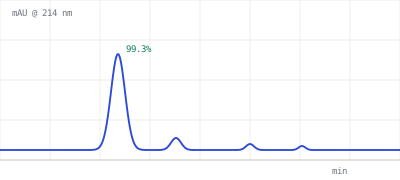
Every Caliper certificate of analysis records the lot number printed on your vial, the date of analysis, the accredited laboratory that performed the work, the instrument method, and the full chromatogram and mass spectrum — not a summary figure.
Cross-check the lot number on the document against the number printed on your vial label. It takes five seconds and it is the single most useful verification you can perform with any supplier in this industry.
Browse all current COAsWolverine Blend FAQ
Wolverine Blend is supplied as white lyophilized powder in a sealed vial, with a batch-specific certificate of analysis documenting HPLC purity and LC-MS identity confirmation for the lot you receive.
No. Every product sold by Caliper Research is supplied strictly for in-vitro laboratory research and analytical use. It is not a drug, food, cosmetic or dietary supplement, and it is not intended to diagnose, treat, cure or prevent any disease in humans or animals.
Yes. Every batch ships with a batch-specific COA reporting all seven release tests: purity by HPLC, identity by LC-MS, water activity, endotoxin, residual solvents, elemental impurities and net peptide content. Current and archived COAs are also published on our Quality & Testing page.
Lyophilized material should be transferred to −20 °C storage, protected from light. The product is shipped at ambient temperature and remains stable in transit; refrigerate or freeze promptly after receipt.
Our release specification is ≥99% by HPLC for single-component peptides and ≥98% for blends, long-chain sequences and complex analogs. Any batch falling below specification is rejected at intake and never enters inventory.
We currently ship within the United States. International research institutions can contact our team for availability, documentation requirements and freight options.
A synthetic pentadecapeptide sequence derived from a gastric protein fragment, widely used in ti…
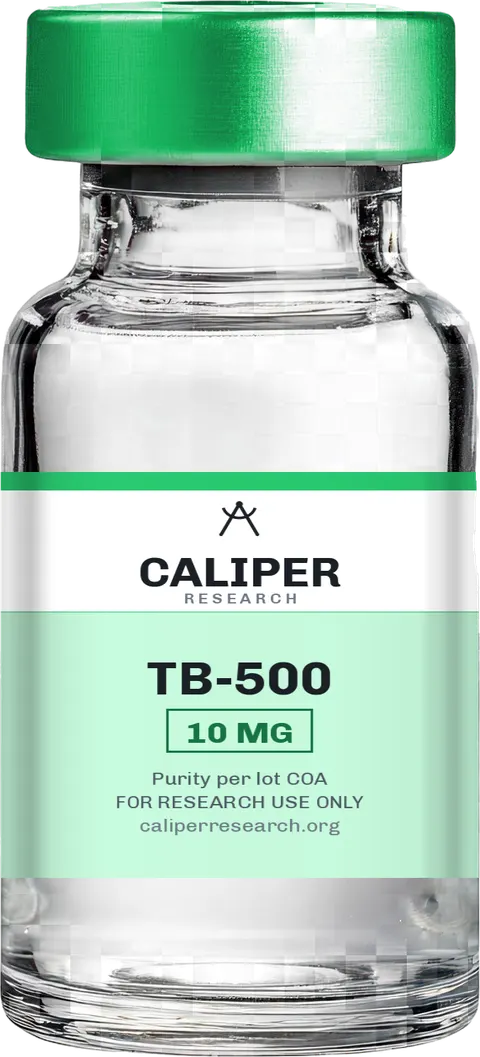
A synthetic fragment of the naturally occurring thymosin beta-4 protein, studied for actin-bindi…
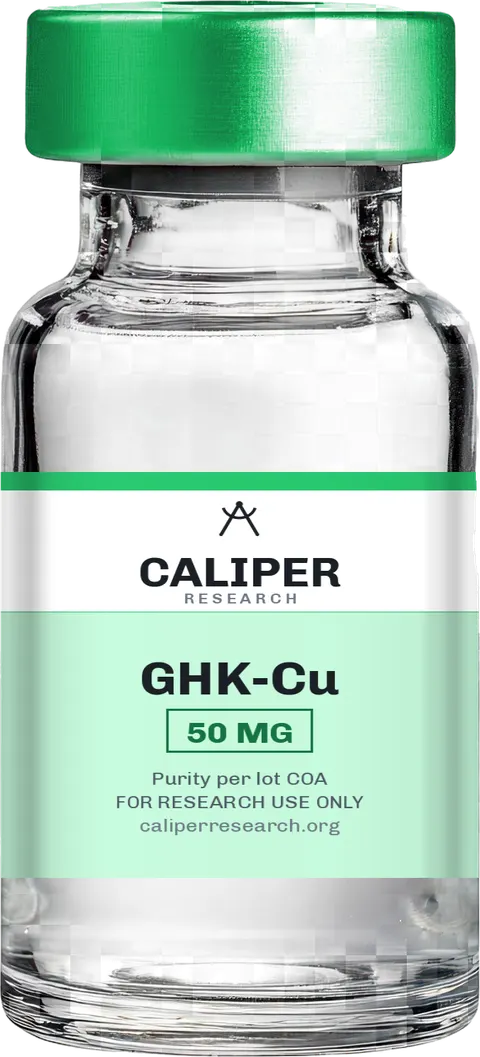
A copper-binding tripeptide complex studied extensively in dermal matrix, collagen and gene-expr…
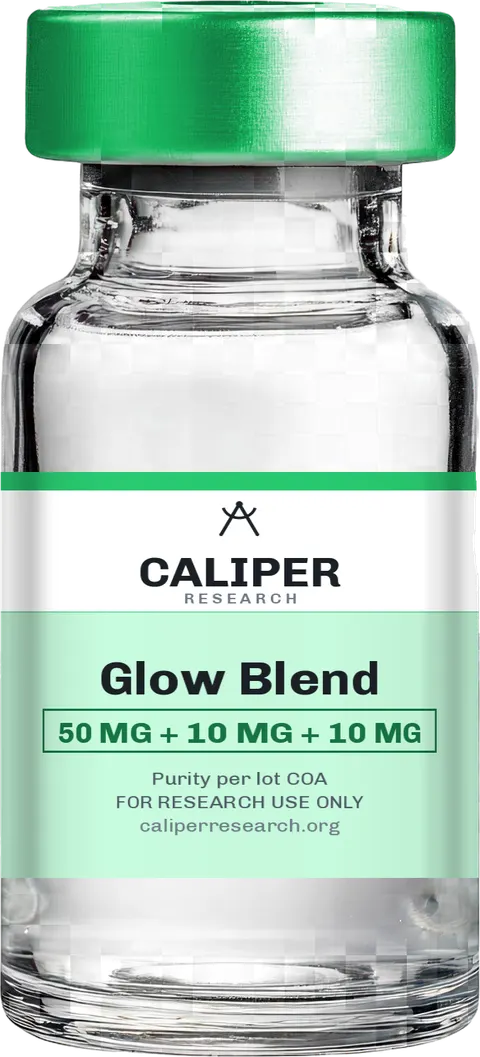
Three repair sequences co-lyophilized in one vial: the copper tripeptide with BPC-157 and TB-500…
Caliper Research
Our team can discuss purity, identity, stability, solubility, storage and how to read the certificate. Questions outside analytical laboratory testing fall outside our scope.
Before you continue
Caliper Research supplies materials for in-vitro laboratory research. Please confirm the following before browsing the catalog:
If you cannot confirm the above, please leave this site. Your confirmation is stored in this browser only.